The identity theory. So a behaviouristic approach has trouble with sensations. A different suggestion is the so-called identity theory: sensations and other experiences are brain processes. We know that brain damage can impair mental functioning and that the mental effects of drugs are put down to their effects on the transmission of electrochemical impulses among brain cells. Does that mean the mind is the brain?
Saying the mind is the same thing as the brain doesn’t explain what it is about the brain that matters, any more than saying that chess is a board game explains what chess is. And even if having a brain were sufficient for having a mind, it doesn’t appear to be necessary as well. Why should having a brain be the only way to have a mind? Why shouldn’t organisms different from us and all terrestrial creatures, and with different nervous systems, be minded? (The nervous systems of octopuses are unlike ours, yet these creatures are intelligent.) And we are excessively used to the idea that suitably programmed artificial systems without nerves may be minded. If those are genuine possibilities, we can’t just take for granted that minds are the same things as brains. In any case, it seems clear that if we think they are, that’s because we assume that what matters about brains is what they do, what their functions are.
Functionalism comes in several varieties, but the central thought is that to have a mind is to be a natural or artificial system in which certain functions, such as those involved in memory, perception and problem-solving, are performed. On this account, when we explain behaviour in terms of emotions, desires, beliefs, and so on we are alluding to states that perform different functions in the individual’s life. One key implication is that, like behaviourism, functionalism is indifferent to the question of what sort of stuff actually performs the relevant functions. As Hilary Putnam, a pioneering functionalist, put it,‘we could be made of Swiss cheese and it wouldn’t matter’ – so long as the relevant functions are performed. (Ιt’s a stretch to claim that they might be performed by cheese – though who can be sure, given modern technology?)

Hilary Putnam 1926-2016
Behaviourism, the identity theory and functionalism encourage the view that the whole universe is purely physical (materialism or physicalism). The Greek thinker Democritus said, ‘By convention there is colour, by convention there is sweetness, by convention there is bitterness; but in truth there are atoms and empty space’.
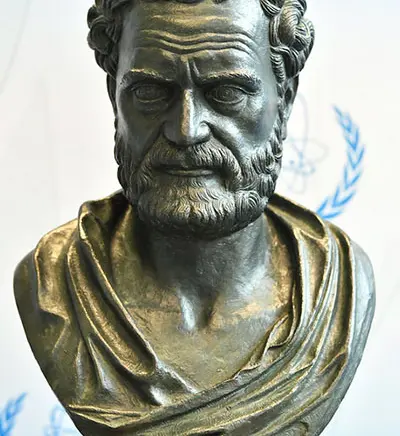
Democritus c.460-370 BC